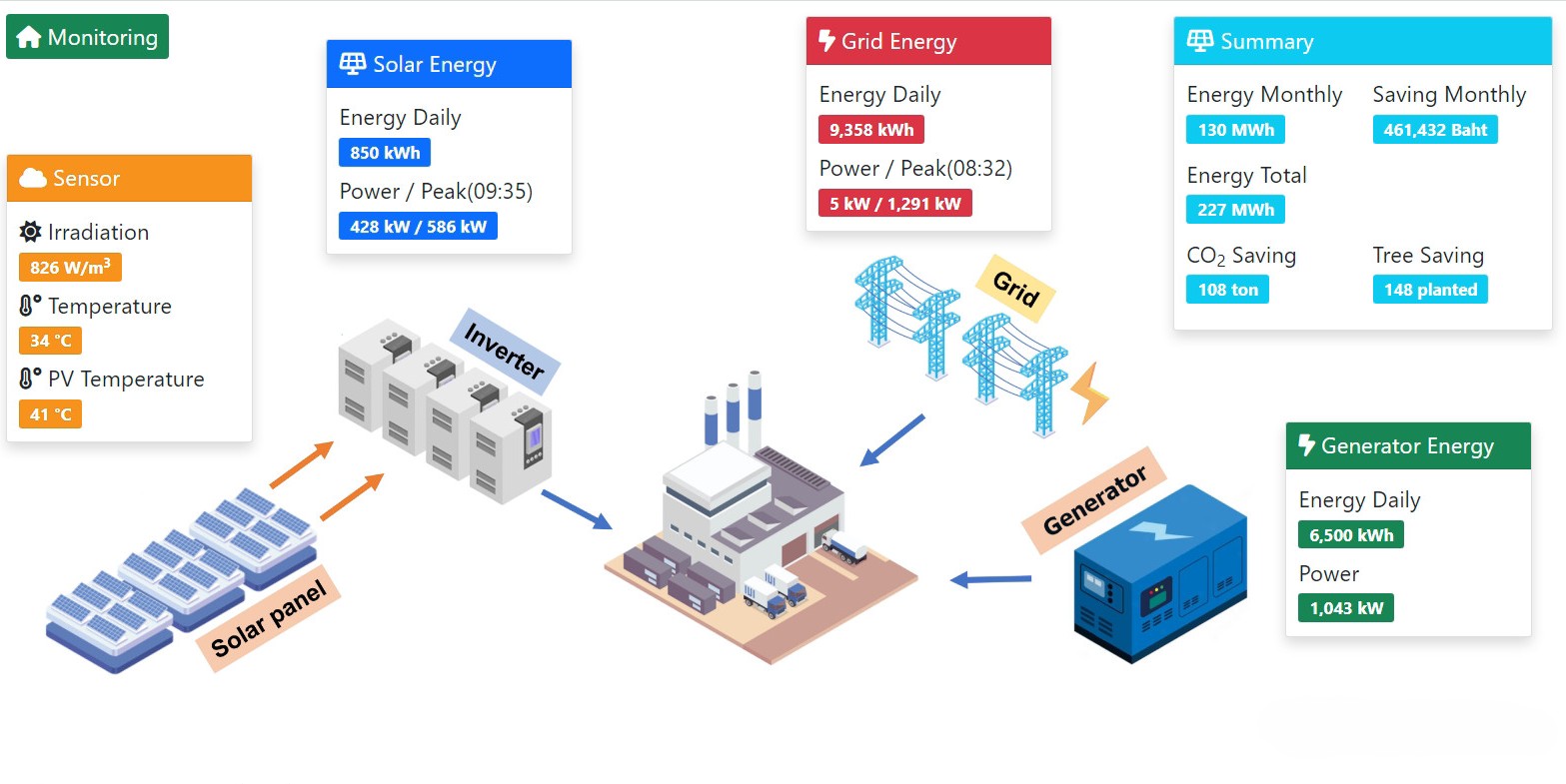
Multi-Source Energy Control
In an era of volatile energy costs and industrial shifts toward sustainability, relying on a single energy source is no longer a secure answer. Combining diverse energy sources to power an organization has become the new standard. Smart Multi-Source Energy Management System seamlessly integrates clean energy, backup power, and the main electrical grid. It utilizes 3 primary energy sources: Solar Rooftop, Battery Storage, LNG Generator and the power distribution system from the Metropolitan Electricity Authority (MEA).
Zero-Export & Hybrid Power Control
System design and architecture utilize a PLC (Programmable Logic Controller) as the central brain for control, which is a standard approach used in industrial plants and large commercial buildings. The control concepts are as follows:
- Solar Maximum Utilization: Maximizes Solar Rooftop power generation based on available sunlight and the current load.
- Generator Dynamic Matching: Adjusts the power generation (Set point) of the LNG Generator up and down according to solar fluctuations and load variations to maintain stability.
- Zero-Export to Grid: Strictly controls the system to prevent any reverse power flow back into the MEA grid to avoid legal and technical issues.
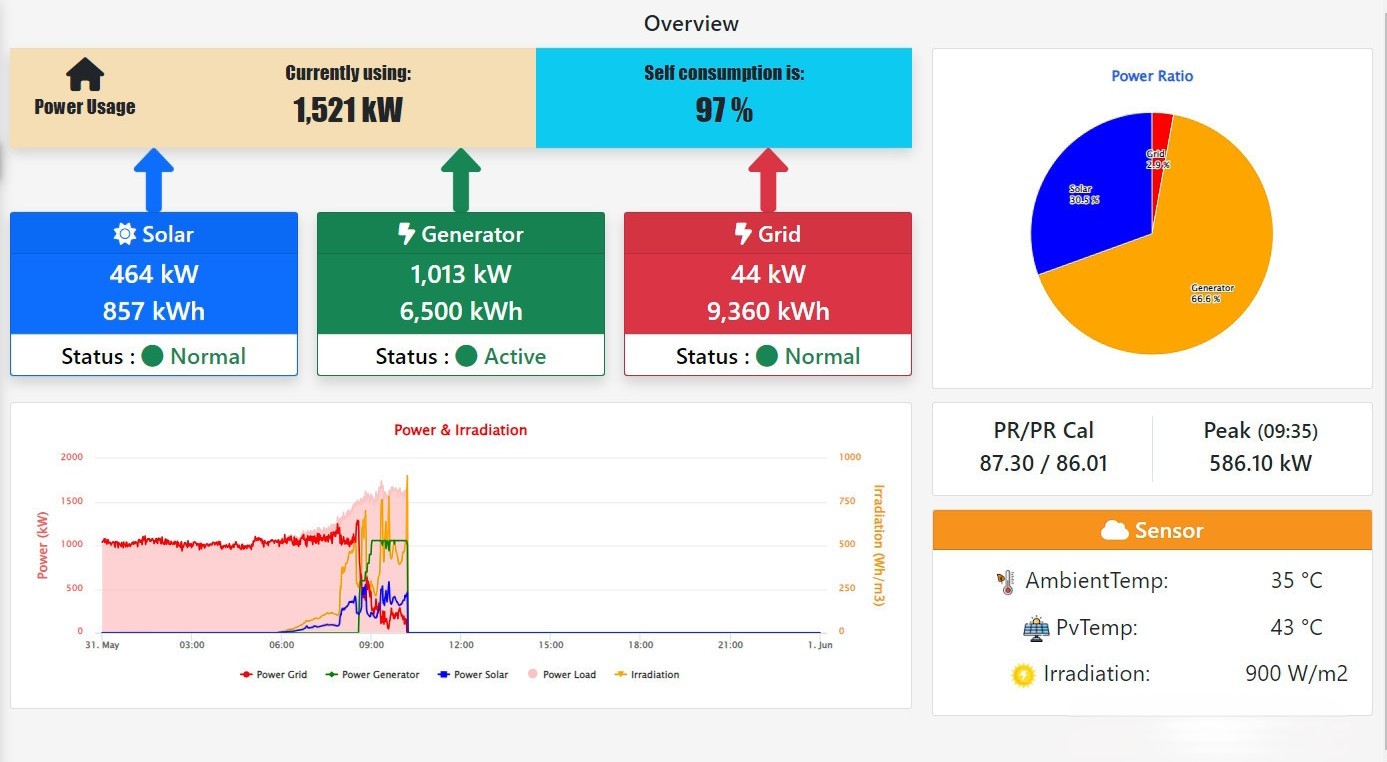
Smart EMS Controller
- TOU Optimization & Peak Shaving The system calculates electricity tariffs from the Metropolitan Electricity Authority (MEA) based on Time of Use (TOU) rates.
Peak Period (Daytime): The system pushes energy usage from the Solar Rooftop to its 100% full capacity. If insufficient, the central brain commands the LNG Generator to run concurrently to supply power, preventing the power drawn from MEA from exceeding the threshold. This helps save both energy consumption costs and demand charges.
Off-Peak Period (Nighttime/Holidays): When electricity rates from MEA are lower, the system shuts down the LNG Generator and switches to using power primarily from MEA to save machine operating hours and reduce fuel consumption.
- Microgrid Control & Seamless Transfer In emergencies, such as an MEA power dip or outage, or a sudden cloud covering the sunlight, the EMS system commands within milliseconds for the LNG Generator to instantly ramp up production to compensate. This ensures the manufacturing process in the factory or building continues without interruption (Zero Downtime).
- Predictive Energy Management The EMS system incorporates AI and Machine Learning to analyze data ahead of time, such as weather forecasts from the Meteorological Department to predict tomorrow's solar power generation, alongside building load consumption behavior. This allows for precise planning of LNG fuel purchasing and inventory management.
Benefits to the Organization
- Maximize Cost Savings: Minimizes energy expenses as the system always selects the "cheapest" energy source available at any given time.
- Energy Resilience & Security: Ensures business continuity free from disruptions caused by power outages, blackouts, or energy shortage crises.
- Sustainability Goals (ESG): Prioritizing energy usage from the Solar Rooftop Tangibly reduces the organization's carbon footprint and helps elevate green factory standard ratings.
- Data-Driven Operations: Executives and engineering teams can view energy consumption reports, savings rates, and entire system statuses via a real-time dashboard on both computers and smartphones.