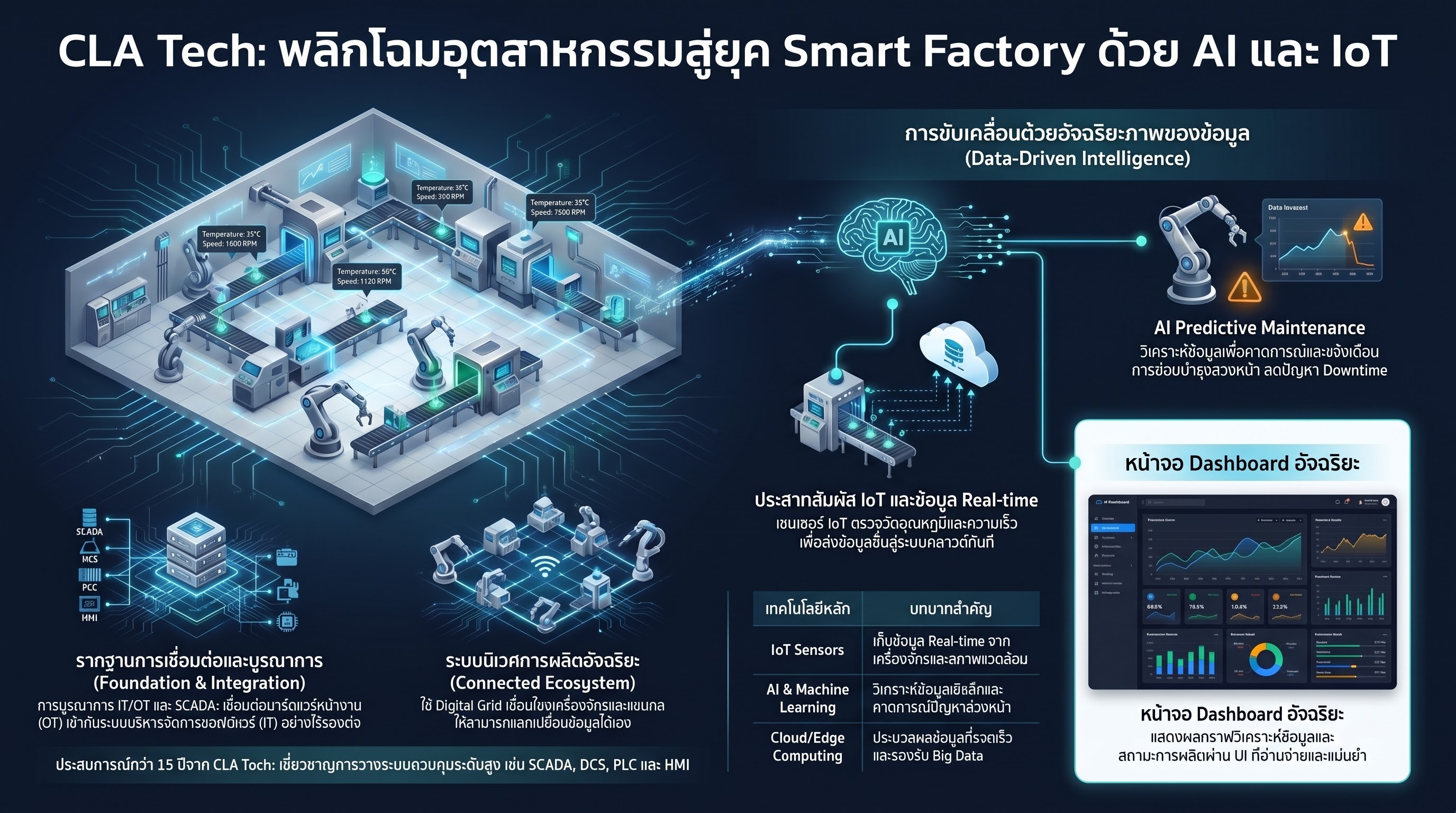
Where the smart factory fits in digital transformation
In Industry 4.0, building a smart factory is a central part of digital transformation. Connected production systems exchange information about their operating state and adjust processes automatically. This extends automation beyond individual machines, helping manufacturers lower costs, reduce errors and compete in international markets over the long term.
Connecting production sensors with the Internet of Things
The Internet of Things (IoT) gives a smart factory a way to observe what happens on the production floor. Sensors on individual machines continuously measure production status, temperature, speed and energy consumption. These connections let machines work together in a coordinated automation system. They also feed real-time measurements into a central monitoring system so operators can track production accurately.
Using AI and machine learning to analyze production data
Manufacturers can use artificial intelligence and machine learning to analyze the large volumes of data generated by IoT sensors. For example, models can learn how a machine normally runs and identify signs of impending failure. This supports predictive maintenance and helps reduce unexpected downtime. Together, these technologies allow a smart factory to make decisions and adjust its production processes automatically.