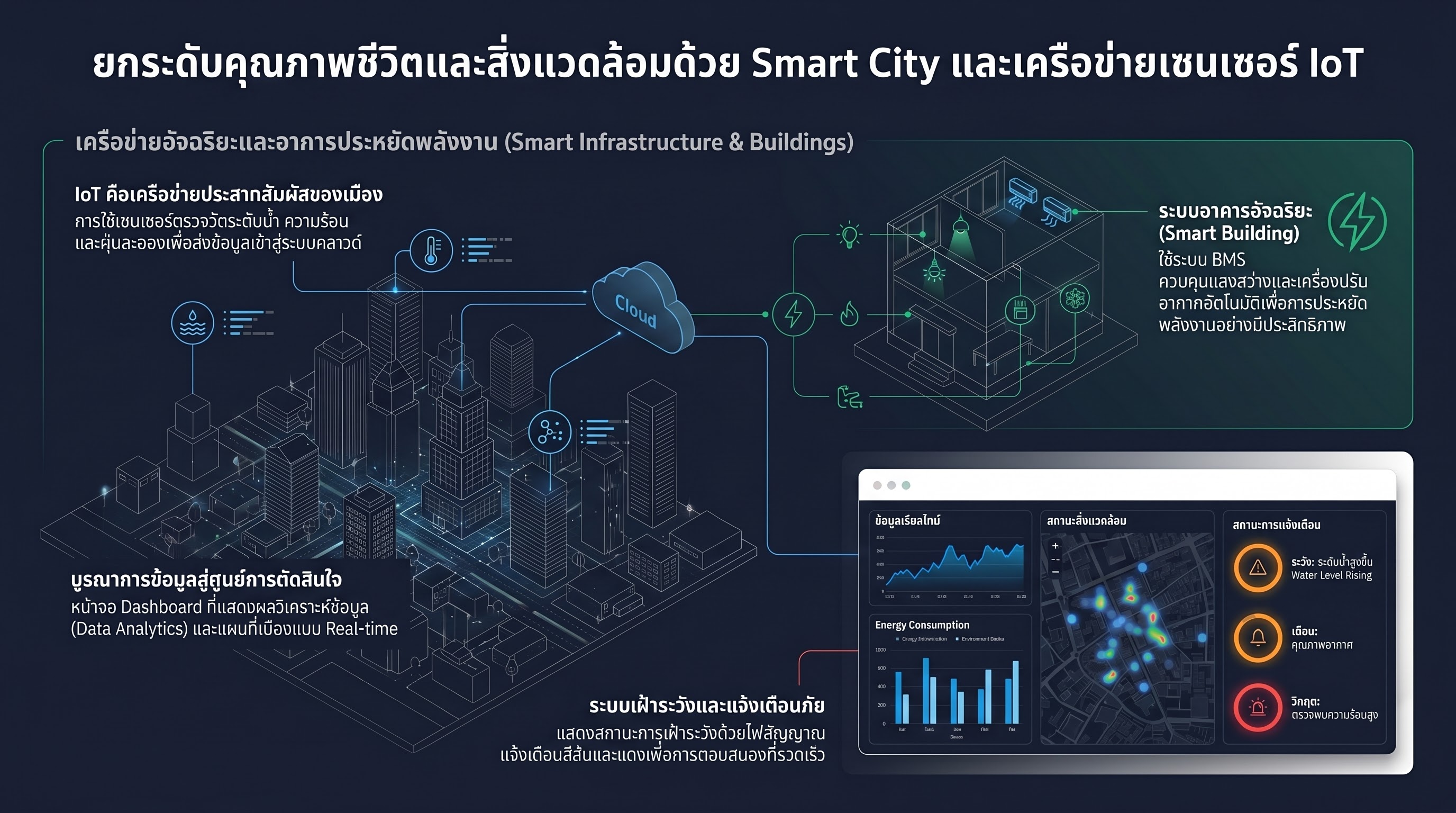
Rapid urban growth puts pressure on resources, traffic management and a city's ability to handle environmental hazards. A smart city integrates digital technology with existing infrastructure to make everyday life safer, more convenient and more sustainable for residents.
How IoT sensors help a city observe conditions
A network of Internet of Things (IoT) sensors gathers readings from infrastructure throughout the city. The system analyzes the data and presents conditions in real time. City officials can see the overall situation and identify changes as they happen.
Using early warnings to respond to hazards
Environmental sensors form the basis of an early warning system. Cities can use these networks in several ways.
- Flood monitoring. Real-time river and drainage canal levels help officials assess risk and warn residents in time to prepare.
- Wildfire monitoring. Heat and smoke sensors in forests and other high-risk areas help officials coordinate a response before a fire spreads.
- Air quality monitoring. Measurements of smoke, pollution and fine particles such as PM2.5 can inform public warnings and public health policy.
Bringing readings together to support decisions
Sensor data flows into a central management system where agencies can assess a situation, direct a response and act promptly. Connecting this system to smart buildings and utility infrastructure also helps the city coordinate the use of its resources.
CLA Tech's role in smart city projects
Building these connections takes systems integration expertise. CLA Tech designs, develops and installs smart city and smart building systems, including IoT sensor networks. Its experience connecting hardware and software helps cities develop infrastructure that can respond as their needs change.