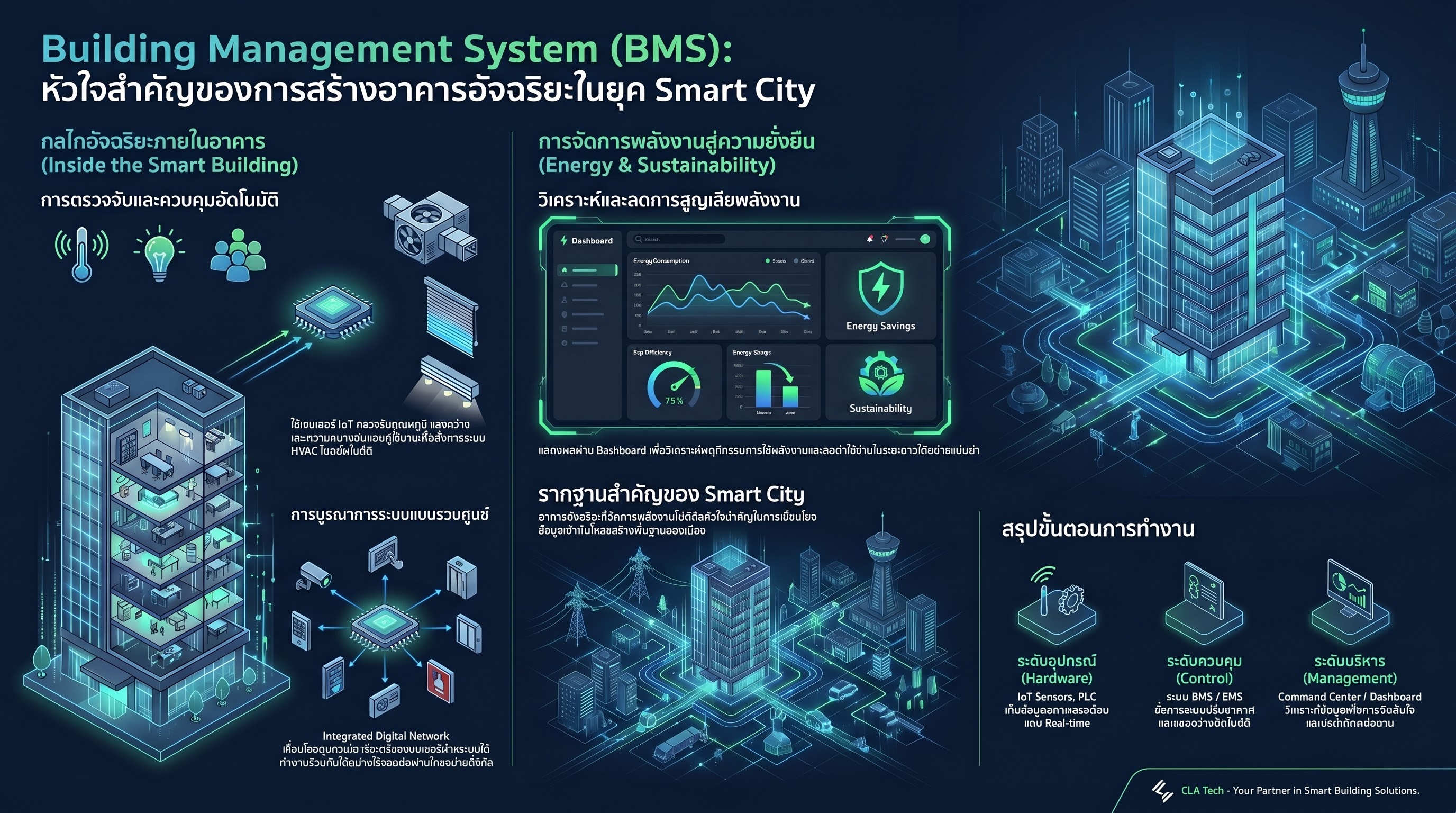
How smart buildings contribute to a smart city
Commercial properties and offices are among a city's largest energy users. Developing a smart city starts with making these properties into smart buildings that can manage their own systems. This helps reduce carbon emissions, improve conditions for occupants and share utility data with the city's central systems.
How a BMS manages conditions inside a building
A building management system (BMS) monitors and controls mechanical and electrical systems, including heating, ventilation and air conditioning (HVAC), lighting, security and lifts. IoT sensors measure temperature, light levels and occupancy. The BMS uses those readings to adjust the equipment automatically so that the building uses energy more efficiently.
Integrating the BMS with site-wide energy management
Connecting the BMS to an energy management system helps operators understand consumption patterns and reduce waste. Over time, this can lower the cost of operating the building and make its infrastructure more sustainable.